
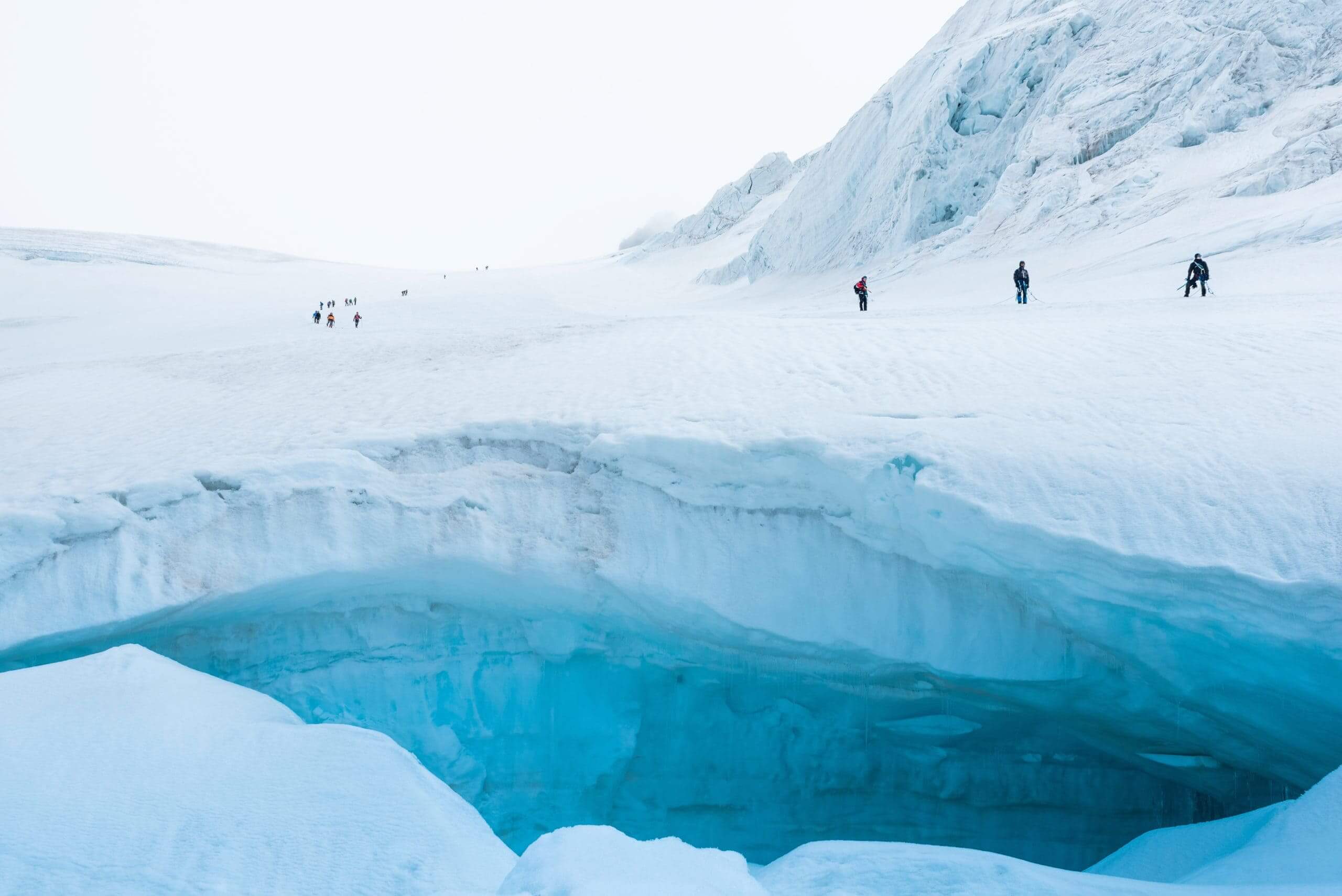
As Earth continues to warm, the Cryosphere, which includes ice, snow, and permafrost, is experiencing rapid and irreversible changes on a planetary scale. The poles and high mountain ranges are transforming faster than the rest of the globe. These cryospheric losses have been widespread, with substantial declines in sea ice across both hemispheres, continental ice sheets in Greenland and Antarctica, Antarctic ice shelves, and mountain glaciers.
Changes in these components of the cryosphere have significant impacts on global sea-level, regional water availability, and feedbacks within the climate system. A crucial aspect of CliC’s work involves facilitating cutting-edge research to address the most important recognized knowledge gaps, including efforts to improve predictive models for sea ice concentration and thickness, ice-sheet and glacier mass loss, the thawing of permafrost, and loss of lake and river ice.
CliC also recognizes the urgent need to address emerging challenges that match cryosphere prediction and models to societal impacts. Bridging science and society is of the utmost importance, especially as we head into the next Intergovernmental Panel on Climate Change (IPCC) cycle with key policy-relevant questions concerning the cryosphere yet to be answered and uncertainties remaining in climate projections. Consequently, we aim to facilitate and coordinate international research at the nexus between climate and cryosphere, bringing together in a once-in-a- decade open science conference members of the World Climate Research Programme working groups and other partner networks to connect the broader cryospheric science and human impacts communities.
OBJECTIVES AND OUTCOMES
For the 30th anniversary since the beginning of CliC, this Open Science Conference will contribute to the UN Decade of Action for Cryospheric Sciences (2025-2034) and prepare the community for the 5th International Polar Year (2032-2033) with a diverse and cross-discipline town hall meeting. This town hall will provide space for the international and interdisciplinary cryospheric community to connect, discuss needs, find synergies, and plan meaningful action.
The conference will also foster discussion around stakeholder engagement with the early career community and produce an edited special issue journal highlighting the resultant new collaborations and scientific advancements.