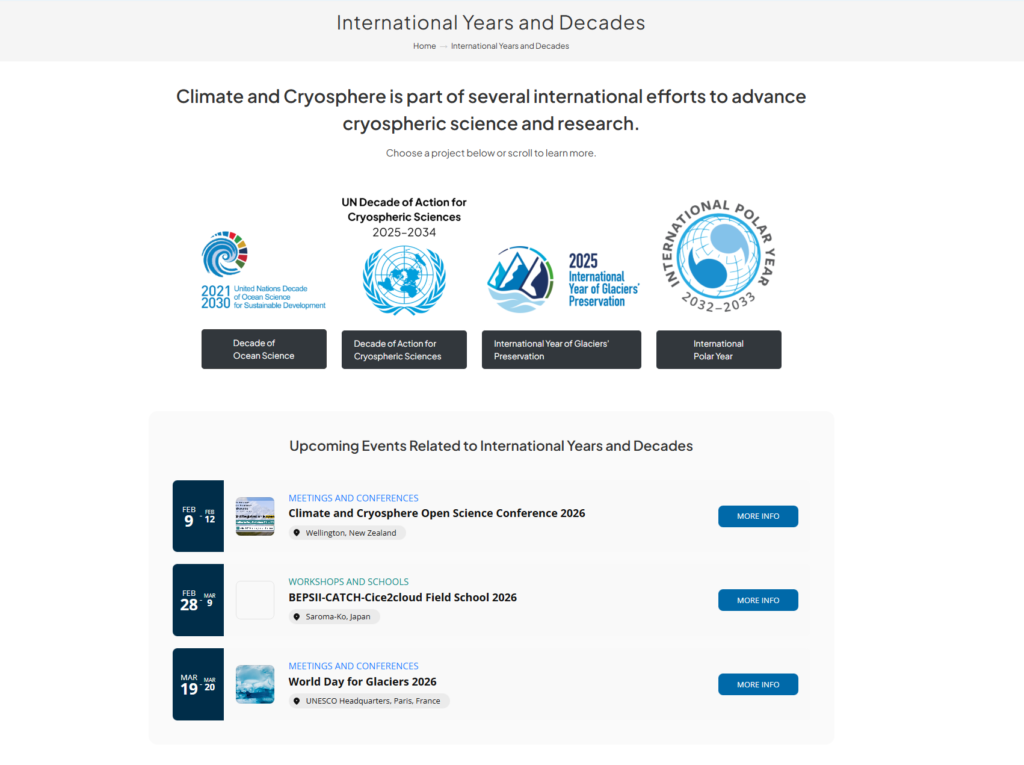

The World Meteorological Organization (WMO) has formally endorsed its participation in the Fifth International Polar Year (IPY‑5), set for 2032–33. This decision signals a renewed global commitment to advancing polar and high‑mountain science at a time when the cryosphere is undergoing unprecedented change.
At its latest meeting, the WMO Executive Council emphasized the importance of international collaboration, data exchange, and partnerships to ensure the success of IPY‑5. The Panel of Experts on Polar and High Mountain Observations, Research and Services (PHORS) will coordinate WMO’s contributions, aligning them with broader scientific and policy frameworks.
“The WMO’s Executive Council endorsed the WMO’s participation in the Fifth International Polar Year 2032–33 at their latest meeting.”
Polar Years have historically left lasting legacies. The International Polar Year 2007–08 catalyzed the creation of WMO’s Global Cryosphere Watch and strengthened Arctic and Antarctic Regional Climate Centres. IPY‑5 is expected to build on these foundations, addressing urgent challenges such as melting glaciers, declining sea ice, and shifting snow cover — all of which have direct consequences for global climate systems and societies far beyond the polar regions.
From a climate science perspective, WMO’s endorsement ensures that standardized methodologies, interoperable datasets, and coordinated monitoring will underpin IPY‑5. This is critical for producing actionable knowledge that informs resilience planning, disaster risk reduction, and adaptation strategies. For countries far from the poles — including tropical nations — the insights generated will be vital in understanding cascading climate impacts such as sea level rise, extreme weather, and water resource shifts.